
If you are evaluating an ecommerce POS, you are probably looking for more than a payment terminal. Most business owners today need a system that connects online sales, inventory, payments, and customer information in one place.
Choosing the wrong POS can create operational problems that affect both customer experience and profitability. Inventory mismatches, disconnected reporting, and slow checkout processes are some of the most common issues businesses face when their systems are not properly integrated.
That is why choosing the right POS matters. A well-designed solution helps you centralize operations, improve efficiency, and create a more seamless shopping experience across all sales channels.
In this guide, we explain what an ecommerce POS is, what features matter most, and how to choose the right solution for your business.
What is an ecommerce POS?
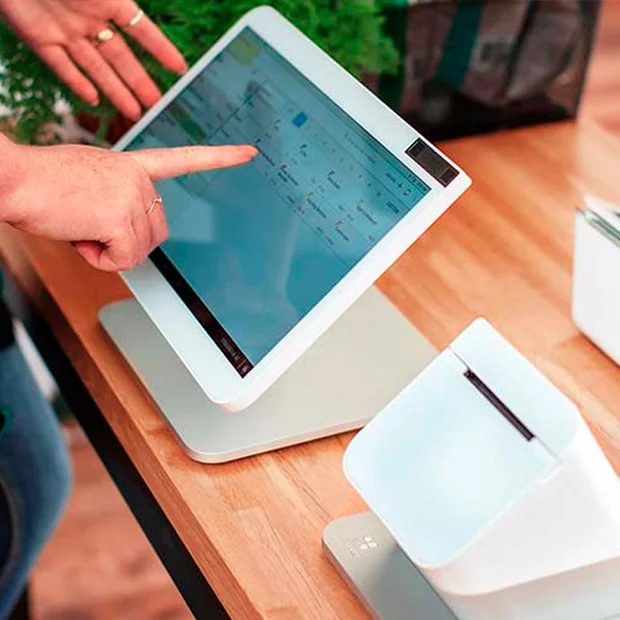
An ecommerce POS is a point-of-sale system that connects your physical and online sales channels into one centralized platform. Unlike traditional POS systems, an POS for ecommerce synchronizes inventory, orders, payments, and customer information automatically across all channels.
This means your business can operate with a single source of truth instead of managing separate systems for ecommerce and in-store sales.
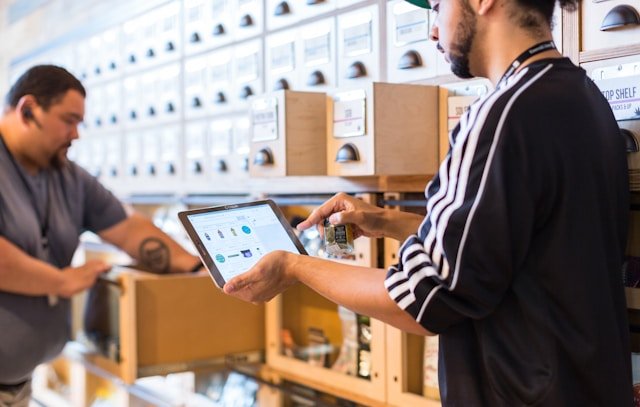
For example, when a customer purchases a product online, your inventory updates immediately. The same happens when a product is sold in-store. This synchronization helps businesses avoid overselling products, inaccurate stock counts, and manual inventory adjustments.
For modern businesses, this level of integration is no longer optional. Customers expect a consistent experience whether they buy online, in-store, or through mobile channels.
Why is an ecommerce POS important for modern businesses?

An ecommerce POS is important because consumer behavior has changed significantly in recent years. Today, customers move constantly between physical and digital shopping experiences.
Many businesses now sell through multiple channels, including:
- Physical stores
- Ecommerce websites
- Social media platforms
- Delivery applications
- Mobile sales channels
Managing all these channels manually quickly becomes inefficient. Without a connected POS system, inventory discrepancies, delayed reporting, and operational errors become much more common.
A modern POS helps businesses centralize operations while improving visibility across the entire sales process. Instead of working with disconnected systems, business owners can monitor inventory, payments, and sales performance from one platform.
This creates a smoother experience not only for the customer, but also for employees and managers.
What should you look for in a POS system for ecommerce?
The best ecommerce POS should simplify operations instead of adding complexity. However, many systems promise advanced features while failing to provide reliable integrations or long-term scalability.
For business owners, the goal should not simply be to process payments. The real value comes from choosing a system that improves operational efficiency and supports business growth.
Before selecting a provider, there are several important features you should evaluate carefully.
Does the ecommerce POS synchronize inventory in real time?
A good POS should update inventory automatically across all sales channels. This is one of the most important features for businesses that sell both online and in-store.
Without real-time synchronization, inventory management quickly becomes difficult. Businesses often experience overselling, inaccurate stock counts, and delayed order fulfillment.
A connected system helps prevent these operational issues by keeping inventory updated automatically every time a sale occurs.
This becomes especially important for businesses with:
- Multiple sales channels
- High product turnover
- Ecommerce and physical store operations
- Delivery or pickup services
Real-time inventory visibility helps business owners make faster and more accurate operational decisions.
Does the POS integrate with your ecommerce platform?
The best ecommerce systems integrate directly with ecommerce platforms and essential business tools. Strong integrations help businesses reduce manual work and maintain operational consistency across all channels.
Before choosing a system, it is important to verify compatibility with platforms and tools such as:
- Shopify
- WooCommerce
- Accounting software
- CRM platforms
- Online ordering systems
When integrations work correctly, businesses can manage products, orders, payments, and reporting from one centralized system.
This not only improves efficiency, but also reduces the risk of operational mistakes caused by disconnected software.
Is the ecommerce POS easy to use?
An ecommerce POS should help your team work faster and more efficiently. If the system is difficult to navigate, it can slow down checkout times and create unnecessary frustration for employees.
Ease of use becomes especially important during busy hours, when speed and accuracy directly affect customer experience.
A well-designed POS should offer:
- Simple navigation
- Fast checkout workflows
- Clear reporting dashboards
- Easy inventory management
- Quick employee training
The easier the system is to use, the faster your team can adapt and operate confidently.
Can the right POS scale with your business?
The right POS should support your business not only today, but also as it grows. Many businesses initially choose inexpensive systems that later become operational limitations.
As sales increase, businesses often need additional tools, more advanced reporting, and support for multiple locations or sales channels.
A scalable ecommerce POS allows businesses to:
- Add additional registers
- Expand to multiple locations
- Increase ecommerce operations
- Integrate advanced business applications
- Improve reporting capabilities over time
Choosing a scalable solution early helps businesses avoid costly migrations and operational disruptions later.
What are the best ecommerce POS solutions for small businesses?
The best ecommerce POS depends on your business model, sales channels, and operational needs. However, Clover solutions have become one of the most popular choices for businesses looking for flexibility, mobility, and strong integrations.
Many business owners choose Clover because it combines payment processing, inventory management, ecommerce connectivity, and reporting tools within one ecosystem.
Some of the most popular options include:
- Clover Mini for retail stores and small counters
- Clover Flex for restaurants and mobile businesses
- Clover Station for businesses that need advanced operational management
Each solution adapts to different operational needs while maintaining a simple and intuitive experience.
For businesses looking to unify ecommerce and physical sales channels, Clover provides a strong balance between functionality and ease of use.
Where can you buy an ecommerce POS?
You can buy an ecommerce POS from authorized providers like Brava, who help businesses choose, configure, and support the right solution for their operations.
Choosing the right provider is important because implementation plays a major role in long-term success. Even the best hardware can create problems if it is not configured properly.
At Brava, we help business owners:
- Select the right POS solution
- Configure ecommerce integrations
- Connect payment processing tools
- Train staff members
- Receive ongoing technical support
This helps businesses launch faster while reducing operational problems during implementation.
Instead of simply selling hardware, Brava focuses on helping businesses build a payment and ecommerce system that supports long-term growth.
Conclusion
Choosing the right ecommerce POS is one of the most important operational decisions for businesses that sell both online and in-store.
The right system helps centralize operations, improve inventory accuracy, streamline payments, and create a better customer experience across every sales channel.
Solutions like Clover allow businesses to manage ecommerce and physical sales from one connected ecosystem, helping reduce complexity while supporting future growth.
If you are evaluating an ecommerce POS for your business, Brava can help you identify the right solution based on your operational needs, sales channels, and long-term goals.
FAQ
An ecommerce POS is a point-of-sale system that connects online and in-store sales into one centralized platform. It synchronizes inventory, payments, orders, and customer information automatically.
The best ecommerce POS for small businesses depends on your operational needs. Clover solutions are popular because they combine ecommerce integrations, payment processing, and business management tools in one system.
Yes. Many ecommerce POS systems integrate directly with Shopify, WooCommerce, and other ecommerce platforms to synchronize products, inventory, and orders automatically.
Inventory synchronization helps businesses maintain accurate stock counts across all sales channels. This reduces overselling, delayed fulfillment, and operational errors.
You can purchase an ecommerce POS from authorized providers like Brava, who help businesses configure, integrate, and support their POS systems properly.